
Compliance Labs helps regulated IT organizations find and evaluate cybersecurity software that addresses DORA, NIS2, HIPAA and PCI DSS requirements. MITRE ATT&CK threat mapping. Independent evaluations across 40+ regulations and frameworks.
1000+ software solutions listed
Evidence-based evaluations


58% of organizations use 25+ cybersecurity tools and 28% manage over 50.
Analysts spend more time maintaining tools than defending the organization.
No integration between tools means no consolidated compliance view.
Breaches and ransomware at record levels with no sign of slowing.

62% of system intrusion incidents are caused by vendors and supply chains.
Third-party risk is the top security priority but teams can't keep up.
Verifying one vendor takes 3 to 12 weeks of questionnaires.
Vulnerabilities are weaponized faster than teams can patch.

49% of security teams cite lack of personnel and skills as their greatest challenge.
Compliance management is the most critical skill gap across security teams.
Compliance is increasingly complex to manage across multiple frameworks.
SIG questionnaires reach 1,936 questions. SOC 2 reports run 80+ pages.
IT cybersecurity software for your compliance requirements.
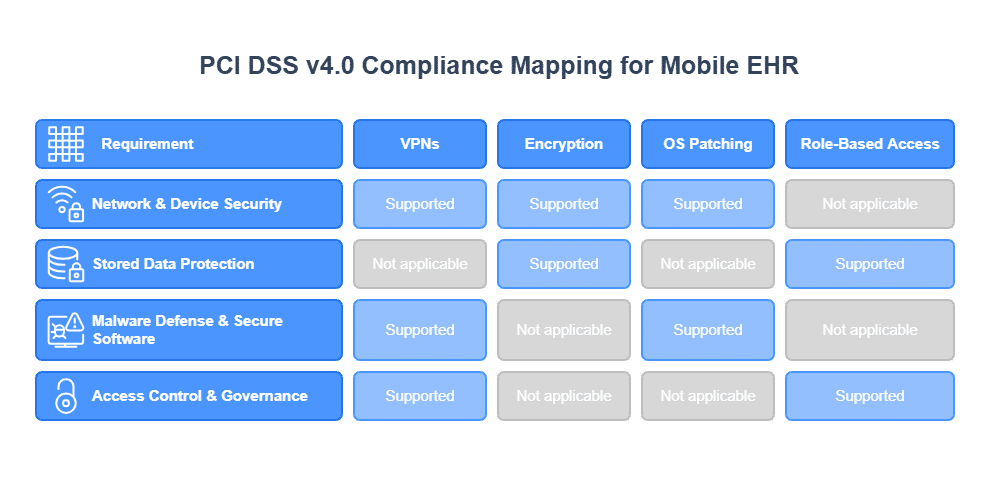
Your compliance obligations depend on your sector, your geography and the data you process. Compliance Labs maps 1000+ cybersecurity software solutions to 40+ regulations and frameworks so you can search by the regulation that applies to you and find the software that addresses your specific requirements. No more spreadsheets. No more guessing.
All your cybersecurity tools mapped to regulations in one place. See what your stack covers across DORA, NIS2, PCI DSS and ISO 27001.
Browse 1000+ software solutions by regulatory requirement. Find what addresses your specific obligations instead of searching by vendor name.
See which regulations your current stack covers and where gaps remain. Know what to prioritize and what to replace before adding another tool to the pile.
Compare how competing solutions cover the same regulation. Same criteria, same methodology, objective data to guide your next purchase.
Compliance Labs evaluates cybersecurity software against your regulatory requirements using a structured methodology based on NIST SP 800-53A. Each evaluation replaces weeks of questionnaire-based due diligence with one independent report per framework. Coverage, gaps and evidence documented for every control.
One evaluation report per framework. Replaces SIG/CAIQ questionnaires and manual evidence review. Coverage, gaps and rationale for every control.
Each software capability linked to specific regulatory articles and framework controls with relationship type and provenance.
Third-party risk assessed against your regulatory requirements. Prioritize which vendors to remediate, replace, or retain based on compliance data.
Each solution mapped against real-world attack techniques. See which threats your vendor stack detects, prevents, or leaves exposed.
When your auditor, regulator or client asks for evidence that your software addresses regulatory requirements, Compliance Labs provides the structured documentation they expect. One evaluation covers multiple regulations and frameworks. Your compliance team stops rebuilding evidence for every audit cycle.
Structured evidence package formatted per regulation. Ready to share with auditors and regulators without your team producing it from scratch.
Your evaluations updated when regulations change, software evolves or new threats emerge. No more point-in-time snapshots.
Notified when regulatory changes impact your software stack. New deadlines, amended requirements and framework updates delivered proactively.
One Compliance Labs analyst assigned to your account across evaluations, frameworks and audit preparation. The expertise your team doesn’t have.
How Compliance Labs evaluates IT cybersecurity software. From regulatory mapping to audit-ready evidence.
Compliance Labs researches cybersecurity software from publicly accessible documentation and maps capabilities to the regulatory requirements they address, helping organizations identify which solutions best cover their compliance obligations. Using a methodology built on NIST IR, each capability is linked to specific regulatory articles with relationship type, provenance and rationale.

Two levels of evaluation, one methodology. The Compliance Assurance Evaluation reviews vendor documentation to assess whether controls are suitably designed to address regulatory requirements. The Evidence Effectiveness Evaluation goes further: Compliance Labs tests the software and collects the technical evidence that auditors expect. Both generate structured, audit-ready reports per framework with coverage type, source provenance and rationale.
Compliance Labs applies the same rigor to your specific environments: cloud infrastructure, SaaS integrations, hybrid architectures. Evaluations include MITRE ATT&CK threat mapping to connect compliance coverage to real world attack techniques. For organizations managing 4+ frameworks simultaneously, multi-framework gap analysis covers your entire software stack with remediation roadmap and priority scoring. A dedicated analyst supports your compliance program.

DORA imposes ICT risk management, third-party oversight and resilience testing on financial entities.

Hospitals and healthtech companies must protect ePHI across complex vendor ecosystems under HIPAA.
Tech companies selling to regulated buyers must address multiple regulations and frameworks.

Agencies and defense contractors must demonstrate compliance across 110+ CMMC Level 2 requirements.
From 15+ years securing critical infrastructure and industrial environments.
Sector: Major European banks (BNPP, Natixis, Crédit Agricole, Crédit Mutuel), payment processors and card scheme operators (VISA France, MasterCard France, AMEX).
Context: We built and led PCI DSS and PA-DSS certification practices across Europe. We developed the audit methodology, adapted it to local regulations and card scheme requirements, trained the teams, and delivered certifications validated by the PCI SSC, VISA and MasterCard.
Challenge: Every certification required mapping the entire payment information system: card data flows across multiple channels, application interactions, third-party processor connections and network architecture. Each bank had a different infrastructure, different vendors and different maturity. We conducted gap analyses against PCI DSS and ISO 27001, evaluated security management systems, reviewed logical and physical infrastructure, and assessed sector-specific risks. No reusable compliance baseline existed. Every engagement started from scratch.
Consequence: Months per certification. Evidence collection was manual and entity-specific. The same payment software was assessed independently by every client with no way to compare results.
Compliance takeaway: After delivering dozens of PCI DSS certifications, the pattern was always the same: weeks spent mapping software to requirements that could have been pre-evaluated. Structured compliance maps per payment software against PCI DSS eliminate the repetitive scoping work and give auditors one consistent reference per product.
Sector: Major European telecom operator managing mobile, fixed-line and enterprise services infrastructure.
Context: The operator faced simultaneous obligations across NIS2 (essential entity), GDPR (subscriber data), ISO 27001 (enterprise security) and RGS (government services).
Challenge: No unified compliance view existed across frameworks. Security audits against ISO 27001 covered one perimeter, GDPR assessments covered another, and NIS2 readiness was handled separately. The same software stack was assessed three times against three different sets of requirements with no cross-mapping.
Consequence: Redundant audit efforts. Remediation plans conflicted. The compliance team could not answer a simple question: does this software address all our regulatory requirements?
Compliance takeaway: Multi-framework compliance requires cross-mapping, not parallel assessments. Unified compliance maps per software covering regulations (NIS2, GDPR) and frameworks (ISO 27001, NIST CSF) eliminate redundant work and give the compliance team one answer per product.
Sector: European reinsurance company operating across multiple jurisdictions with complex regulatory exposure.
Context: We conducted executive-level risk profiling through interviews with CEO, CFO, CIO and CISO to identify sensitive business assets, associated risks and organizational maturity across all business lines.
Challenge: The reinsurer had multiple compliance programs running in parallel, including Solvency II, GDPR and ISO 27001, each handled by a different team with a different methodology. The IT software stack had never been evaluated against regulatory requirements in a structured way. No shared compliance reference existed across teams. The objective was to define a common security policy framework applicable to all entities, but without knowing how the software addressed each regulation, the framework remained theoretical.
Consequence: Three compliance programs, no shared data. The board received fragmented reporting. Procurement decisions were made without knowing whether new tools addressed existing regulatory gaps or created new ones.
Compliance takeaway: Enterprise risk management requires compliance visibility at the software level. Structured compliance maps per product across regulations (GDPR, DORA) and frameworks (ISO 27001, NIST CSF) give the board a unified view and turn a theoretical policy framework into an actionable compliance baseline.
Sector: Banks and payment application vendors requiring security validation before production deployment.
Context: Banking applications processing card data and sensitive financial transactions required security validation against PCI DSS, PA-DSS and internal security standards before deployment or certification.
Challenge: Each application audit required evaluating the security management system, logical and physical infrastructure, sector-specific risks, contractual requirements and human resource controls. Penetration testing covered application-level vulnerabilities, authentication weaknesses and data exposure risks. Vendor applications were assessed against both regulatory requirements and internal security policies, but no structured reference existed to compare how different vendors addressed the same controls.
Consequence: Every application audit was a standalone engagement. Findings from one vendor could not be compared to another. Procurement teams had no way to evaluate competing solutions against the same compliance criteria before selecting a vendor.
Compliance takeaway: Application security validation needs a comparable reference. When procurement evaluates competing payment solutions, structured compliance maps per software against PCI DSS and PA-DSS give teams objective, side-by-side comparison instead of vendor-specific audit reports that cannot be compared.
The expertise behind every compliance map, evaluation and report.
Vendor-neutral assessments designed for security, risk teams and audit-ready documentation.

Supporting organizations across IT, OT and AI compliance programs since 2000.

Designed by former compliance officers who understand regulatory pressure across industries.